

Streaming TV Advertising FAQ: What Buyers Need to Know
Thinking about jumping into Streaming TV advertising? Here are straight answers to the questions buyers ask most before kicking off a campaign.
What is Streaming TV vs. OTT vs. CTV?
Streaming TV is the umbrella term for any ad served alongside TV programming streamed over the internet.
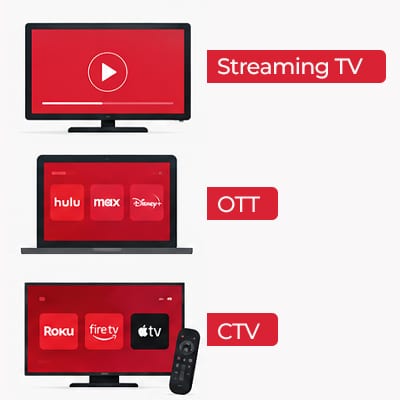
OTT (Over-the-Top) refers to the content itself — shows delivered directly via the web rather than traditional cable or satellite packages.
CTV (Connected TV) means the physical screen or device people use to watch that content, like a smart TV, Roku, Apple TV, or gaming console.
While people often use these terms interchangeably, each describes a distinct part of the streaming picture.
How is Streaming TV different from traditional TV?
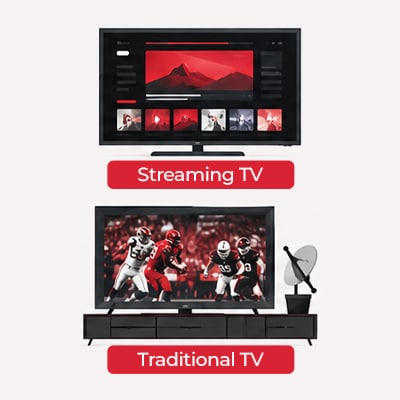
Traditional TV broadcasts the same commercial to everyone watching a given show or channel, relying mostly on program type, airtime, and general geographic region.
Streaming TV lets you zero in on specific audiences using detailed data on location, demographics, lifestyle interests, online behavior, and more.
Plus, it offers real-time tracking so you can see how viewers respond and tune your campaign while it’s active.
The takeaway: Streaming TV combines the massive reach and visual prestige of big-screen TV with the precise targeting and flexibility of digital ads.
Who can I target?

While exact options depend on the platform and setup, Streaming TV gives you plenty of ways to refine your audience:
- Geographic location
- Demographics
- Interests and behaviors
- Viewing habits
- Purchase intent
- First-party audience data
- Device and household characteristics
Instead of paying to reach broad TV demographics, you can focus your ad spend directly on the people most relevant to your business.
How does household and device targeting work?

Streaming platforms draw on device and audience insights to help you reach target households across their connected devices.
For instance, you might serve an ad to a family on their living room TV and follow up with complementary messaging on their smartphones, tablets, or laptops.
Because features vary by platform and inventory, we recommend tailoring your strategy to your specific business goals.
Where do ads appear?
Your ads can run across a wide variety of popular channels, networks, and environments.
YouTube TV
Connect with viewers streaming live broadcasts, including cable news, primetime hits, and sports events.
YouTube Select
Place your message alongside highly engaging, curated content from top YouTube creators.
Live Sports
Engage passionate fans watching pro, college, and championship sports as the action unfolds live.
Amazon
Tap into Amazon’s vast streaming network using rich shopping and browsing insights.
OTT/CTV
Extend your campaign across premium streaming apps and publisher networks to maximize coverage.
The best fit comes down to who you want to reach and what you’re looking to achieve.
What’s the difference between YouTube TV and YouTube Select?
It really comes down to the environment and viewer mindset.
YouTube TV operates like modern cable TV, giving you direct access to live broadcasts, major networks, and sporting events.
YouTube Select gives you curated placement across the top tier of YouTube’s popular, brand-safe creator content.
| YouTube TV | Live television broadcasts |
| YouTube Select | Premium digital creator content |
Choosing between them depends on where your target audience spends their screen time.
Can I advertise during live sports?
Absolutely. Streaming offers seamless access to live sporting events without traditional broadcast limitations.
You can align your brand with professional leagues, college sports, and marquee events throughout the season.
This is a great option for brands looking to connect with highly attentive audiences watching must-see live TV.
What role does Amazon play?
Amazon stands out because of its rich first-party shopping data and intent signals.
Ads can run across premium environments like Prime Video, live sports, and Amazon’s broader ad network.
This lets you target audiences based on real purchasing habits and high-intent commercial behavior, not just media consumption.
Amazon is ideal when tying advertising directly to commercial intent is central to your strategy.
What does Streaming TV cost?
There’s no flat rate for Streaming TV advertising.
Pricing varies depending on key factors like:
-
- Platform and inventory
- Audience
- Geographic market
- Targeting requirements
- Campaign size
- Campaign duration
- Desired reach and frequency
Most campaigns are priced on a CPM (cost per thousand impressions) basis, meaning your total investment reflects your chosen inventory and scale.
A better question than “How much does it cost?” is “What can we deliver with your budget?”
How is performance measured?
Streaming TV offers far clearer feedback loops and performance tracking than traditional TV broadcasts.
Depending on your setup, you can track key metrics including:
- Impressions
- Video completion rate
- Reach and frequency
- Website visits
- Click-throughs
- Conversions
- Cross-device engagement
- Other campaign-specific outcomes
With advanced measurement tools, you can even connect ad views directly to site visits, brand searches, store visits, or online sales.
That means you can tweak and optimize your campaign while it’s running — no need to wait until it’s over to see what worked.
Can I use existing video creative?
In most cases, yes! You don’t need to spend thousands creating a brand-new commercial from scratch.
You can often repurpose or adapt existing content like:
- Social videos
- Testimonials
- Product videos
- Existing commercials
- Brand videos
- Short-form video
to fit streaming specs and campaign requirements.
If you don’t have video assets ready, custom creative can be produced or tailored specifically for your campaign.
How long should a campaign run?
There’s no single rule for campaign length.
The ideal flight length depends on your goals, budget, target audience, and ad frequency.
Short bursts work great for seasonal promotions or events, while continuous campaigns allow you to build steady brand awareness, gather optimization data, and maintain reach over time.
The sweet spot is running long enough to gather actionable data and engage your audience without overspending or burning out viewers with ad fatigue.
Not sure which Streaming TV solution is right for you?
Each option serves specific goals and target audiences. Here’s a quick guide to matching your primary goal with the right solution:
| If your goal is to… | Consider |
|---|---|
| Reach live TV viewers | YouTube TV |
| Reach premium creator audiences | YouTube Select |
| Reach sports fans | Live Sports |
| Reach audiences with purchase-intent signals | Amazon |
| Expand across streaming inventory | OTT/CTV |