
- About Us
- About Us
Mission To provide quality service for small to mid-sized to large businesses through an array of digital services and strategies designed to increase web and mobile presence, generate leads to expand your customer base, and deliver significant ROI and increased revenues.
- In the Press
 THIS JUST IN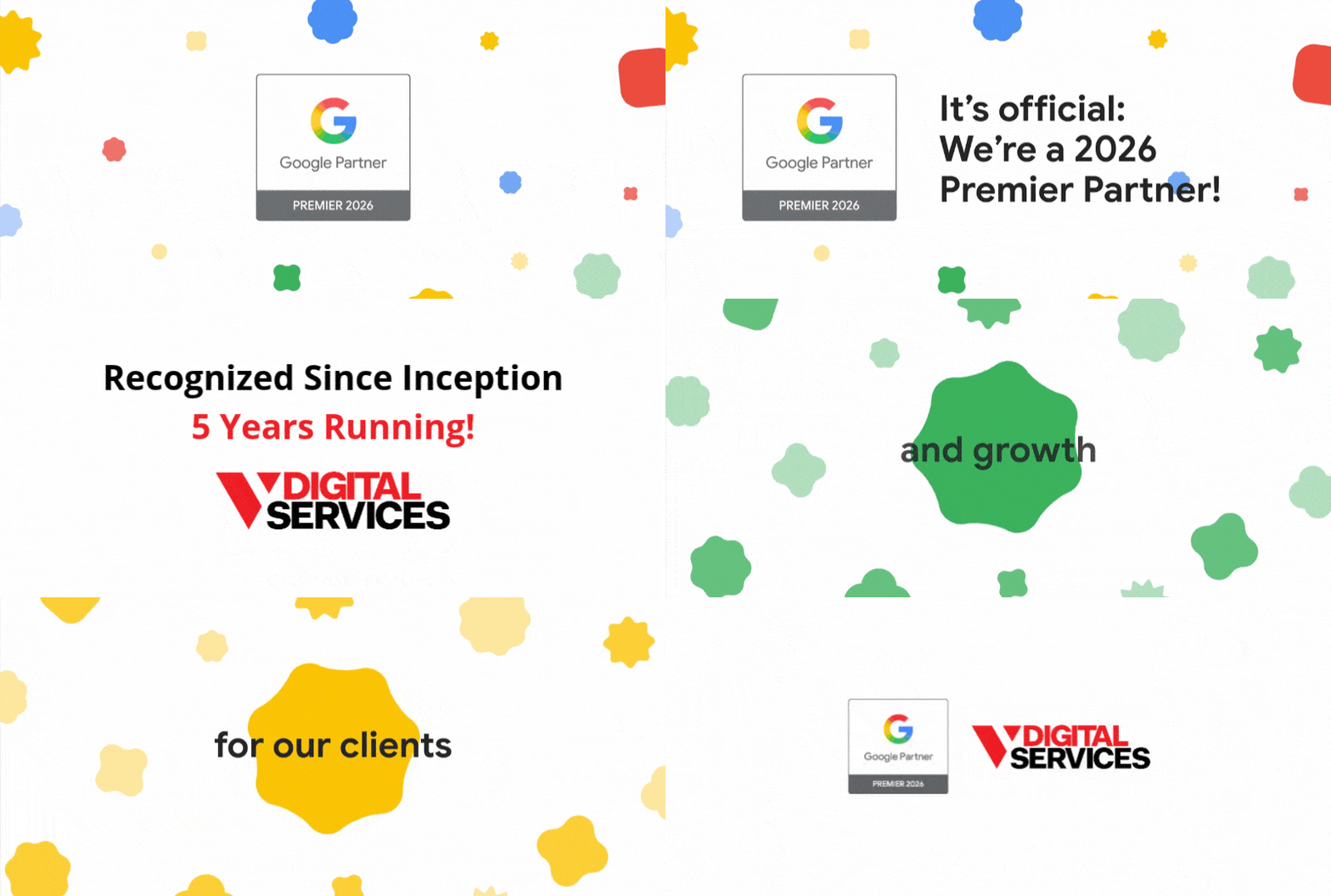
V Digital Services Earns Google Premier Partner Status for Fifth Consecutive Year
PHOENIX, AZ — March 12, 2026 — V Digital Services has once again achieved Google Premier Partner status, marking its fifth consecutive year earning the distinction under Google’s program and maintaining recognition since its launch. The achievement places the agency among the top 3% of participating Google Partners in the United States. The Google Partner [...] KEEP READING KEEP READING
- Solutions
- Paid Media
- Knowledge Base
Straight From the Pros
 Subliminal Messages Examples in AdvertisingJuly 31, 2026
- Contact Us
- Call (888) 441-0784

- About Us
- Solutions
- Knowledge Base
- Contact
V DIGITAL SERVICES Product Insights
Scaling Walled Gardens With First-Party Data

On September 12, 2024
People often bounce around online, moving from social media platforms like Twitter to shopping on Amazon, eBay, or Etsy with just a few clicks. To keep users engaged, platforms like Facebook and TikTok create “walled gardens” — closed ecosystems where they collect user data and serve targeted ads, keeping people on their sites longer. While this works well for the platforms, it can be costly and restrictive for businesses trying to advertise across multiple channels.
What if advertisers had an alternative to relying solely on the limited data available within walled gardens? Instead of depending solely on the limited data provided by walled garden platforms to reach audiences, businesses could tap into their own first-party data. This approach enables them to upload and utilize their data for more precise targeting, blending the detailed targeting of walled gardens with the expansive reach of the open web.
What Is a Walled Garden? (In Relation to the Internet)?
A walled garden is a digital space, like a website or app, that controls what users can see and do. It keeps users inside by limiting their access to only what’s served within that space, whether they’re browsing, shopping, or communicating. Walled gardens are closed ecosystems that maintain strict control over who sees what content and how businesses are permitted to advertise within the environment.
Who Uses Walled Gardens in Their Platforms & Advertising?
Google is a prime example of a walled garden in digital advertising. Its platform controls the visibility of ads across its search engine, YouTube, and other Google-owned sites. Advertisers must follow Google’s specific rules and bidding systems to reach users. If you want to advertise, you have to play by their rules, and if you’re not on their platforms, you’re missing out on a huge audience.
Other examples of walled gardens are Meta, which includes Facebook and Instagram, and Amazon Advertising. These platforms amongst others control around 70% of all ad spending, a share that continues to grow. However, businesses often face challenges due to the strict targeting policies imposed by these walled gardens, which can limit their ability to fully understand customer preferences and optimize their marketing strategies.
The Current Challenge of Marketing in a Walled Garden
Walled Gardens take power from businesses and their marketing campaigns by making them rely solely upon the user data they’ve collected and confined to a specific platform. For example, Meta only has access to what users do on Facebook or Instagram, and Google only knows about their activities on Google services. This is because the data you have access to within walled gardens isn’t raw data but instead formatted within the platform’s tools and metrics. As a result, you stay wholly reliant upon third parties who know more about your prospects and customers than you.
Unlock First-Party Data
Your solution to the common struggles that businesses navigate when advertising within walled gardens, is first-party data. First-party data is audience insight that you fully own, control, and can leverage across any marketing platform including walled gardens.
What Is It?
In marketing, there are four types of customer data you can collect:
- Zero-Party Data: Information proactively shared by consumers
- First-Party Data: Data collected directly from web users or clients
- Second-Party Data: Data collected and sold between two parties as part of partnerships
- Third-Party Data: Aggregated or sold data parties that aren’t end-users or data collection platforms
First-party data is the most reliable as it is the personal information that they directly share with you in the process is first-party data. The more first-party data that you independently collect, the more you’ll invariably know about the people you serve or intend to serve.
How Can My Business Collect First-Party Data?
There are multiple ways to collect first-party data:
- Use your website to implement an analytics platform
- Have new clients create accounts, register, or opt into email marketing campaigns
- Integrate your social media profiles
- Create and send feedback forms and surveys
- Purchase and use a quality CRM and platform
- Use session recordings and heatmaps to track user behaviors
However, you’ll have to use all of these things and more to get results that outperform the data you’ve been relying on behind walled gardens. With V Audience Labs’ innovative first-party data solution, Prospect Hub, you can instantly identify up to 30% of the anonymous users on your website. Prospect Hub leverages a robust network and a cutting-edge identity resolution graph to create rich, detailed customer profiles. Simultaneously, Prospect Hub ensures consent with an integrated Consent Management Platform that ensures your first-party data is pulled following up-to-date privacy laws.
How Prospect Hub, Our First-Party Data Solution, Helps Your Business Scale Walled Gardens
With Prospect Hub, collecting and owning your audience data is simplified. Our marketing technology helps you take back control over your own data, so you can manage and activate marketing campaigns both within and outside of walled gardens like Google or Facebook. Using Prospect Hub, you can leverage a world-class data cooperative to resolve customer information, allowing you to run targeted ads across various channels and fully integrate your first-party data for optimized advertising strategies.
In Practice: First-Party Data Activations
Use Prospect Hub to identify new site visitors and resolve both B2B and B2C data for detailed firmographic, demographic, or contact information. Simply upload the relevant pieces of first-party data collected with Prospect Hub to a walled garden, tell it to target individuals that match your specified audience data points, and your ads will be served to matching prospects. V Digital Services’ client, 1-800-Plumber + Air, experienced the impact of successfully leveraging first-party data with ad clicks increasing by close to 26%.
Discover the Power of First-Party Data with Prospect Hub
Learn how to overcome the limitations of walled gardens using our first-party data solution, Prospect Hub, for targeted advertising. V Digital Services is here to guide you through harnessing the full power of your own data for unparalleled marketing success. Contact us to learn how we can help you make the most of your first-party data in today’s competitive environment.
Post navigation
 PREVIOUS
NEXT 

MORE LIKE THIS
Cheap Clicks, Lower Conversions: How to Navigate the New Paid Media Landscape
August 19, 2026
Is Your TV Ad Budget Secretly Wasted? Why VDS Changes the OTT/CTV Game
August 5, 2026
The Death of the “Blanket” Broadcast: Hyper-Localism in Political Marketing
August 3, 2026
First-Party Data in Action: How Prospect Hub Transforms Your Customer Insights into Growth
May 29, 2026
How V Digital Services Is Using Birdeye to Support Modern Local SEO
May 29, 2026
The CEO’s Guide to Google Performance Max (PMax) in 2026
May 6, 2026
Your 2026 Website Survival Guide: Balancing Peak Performance with ADA Compliance
May 5, 2026
Data, Privacy, and the New Reality of Marketing ROI
March 24, 2026
What a High-Accountability Digital Marketing Program Looks Like
March 10, 2026
From The Experts: How User Behavior is Shaping Organic SEO in 2026
February 12, 2026

 CLIENT LOGIN
 Call (888) 441-0784
Sign Up to Get the latest news and industry trends!
2026 V Digital Services | ALL RIGHTS RESERVED | SITEMAP | Privacy | Terms Of Use | Cookies | Accessibility | Your Privacy Rights
Use of this website constitutes acceptance of our policies linked above. V Digital Services may earn a portion of sales from products & services purchased through links on our site from our affiliate partners. ©2026 V Digital Services, LLC. All rights reserved.Do Not Sell or Share My Information