
- About Us
- About Us
Mission To provide quality service for small to mid-sized to large businesses through an array of digital services and strategies designed to increase web and mobile presence, generate leads to expand your customer base, and deliver significant ROI and increased revenues.
- In the Press
 THIS JUST IN
V Digital Services Earns Google Premier Partner Status for Fifth Consecutive Year
PHOENIX, AZ — March 12, 2026 — V Digital Services has once again achieved Google Premier Partner status, marking its fifth consecutive year earning the distinction under Google’s program and maintaining recognition since its launch. The achievement places the agency among the top 3% of participating Google Partners in the United States. The Google Partner [...] KEEP READING KEEP READING
- Solutions
- Paid Media
- Knowledge Base
Straight From the Pros
 Subliminal Messages Examples in AdvertisingJuly 31, 2026
- Contact Us
- Call (888) 441-0784

- About Us
- Solutions
- Knowledge Base
- Contact
V DIGITAL SERVICES BLOG Straight From The Pros
Navigating the New “Living Room” Ad Stack: Winning on YouTube TV, Amazon, and OTT
Streaming TV, YouTube Select Ads, YouTube TV Ads
Posted by V Digital Services On June 29, 2026
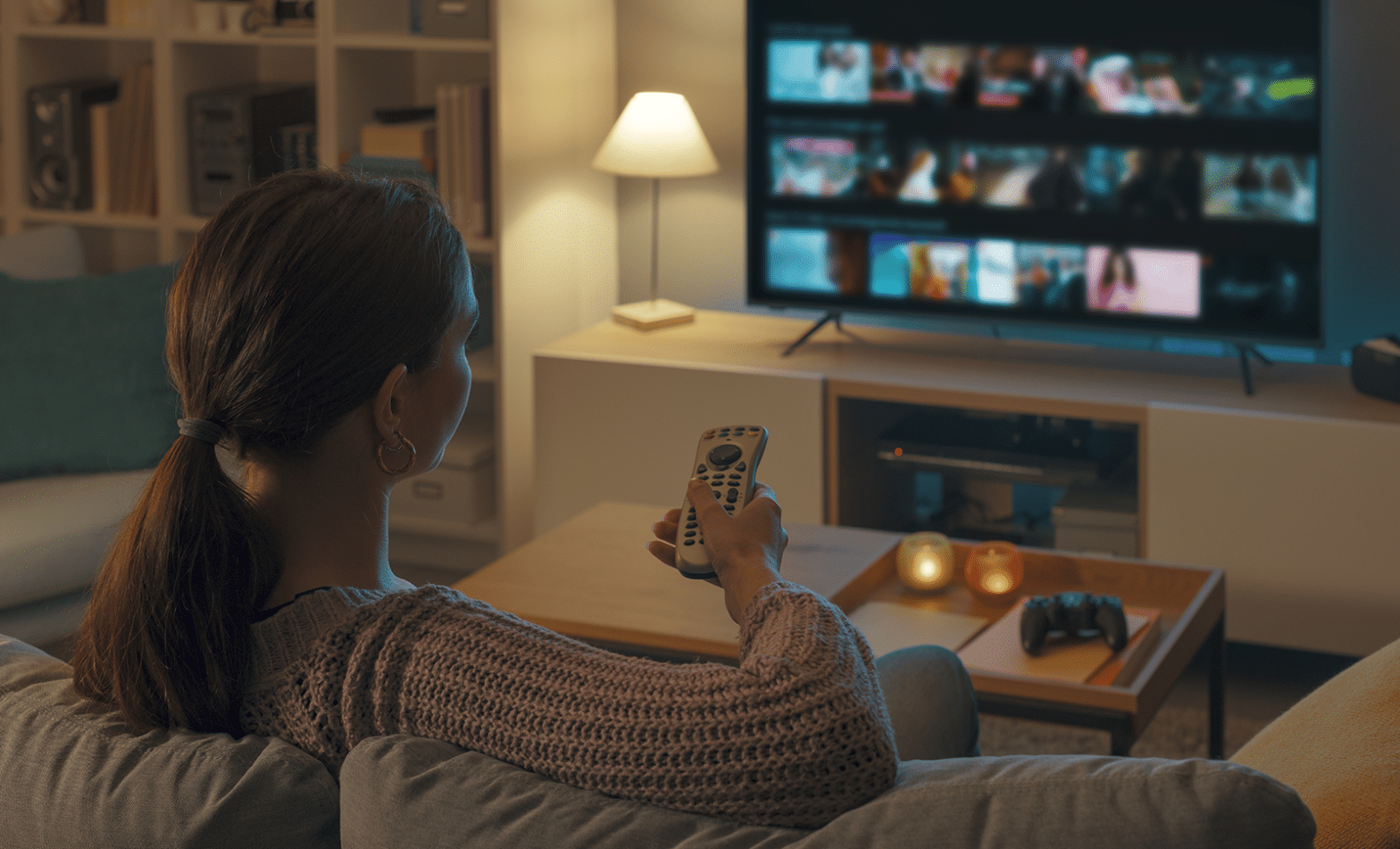
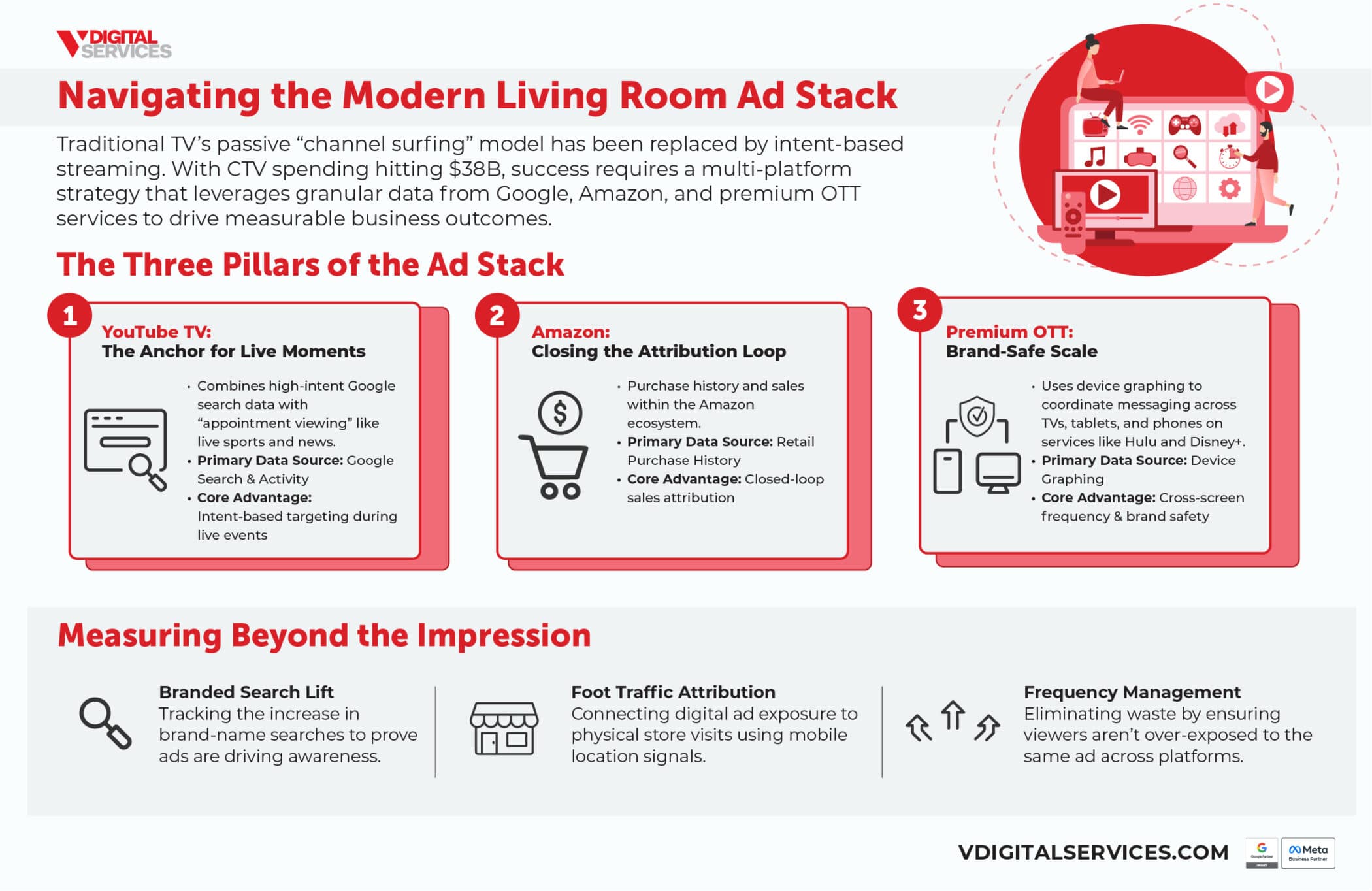
The television in your living room is now one of the most sophisticated advertising platforms available. Streaming accounts for nearly half of all TV viewership in the U.S., ad-supported tiers have become the norm across every major platform, and CTV ad spend is expected to hit $38 billion this year. Advertisers can now target streaming audiences based on what they search for, what they buy, and what they watch, with a level of precision that traditional TV was never designed for.
The challenge is that each major streaming platform works differently, and those differences directly affect how you spend your budget and what you can actually measure. YouTube TV, Amazon, and premium OTT services like Hulu, Max, and Disney+ each offer distinct advantages, and using them together effectively is what separates a real video strategy from just buying impressions.
The Shift From Channel Surfing to Intent-Based Streaming
The old model of TV advertising was built around broad reach. You picked a network that seemed right for your demographic, chose a time slot for the same reasons, and hoped your audience was watching. Viewers were often passive, flipping through channels with no particular intent, and you accepted that a large chunk of your spend would go toward people with zero interest in your product.
The streaming era has replaced that passive viewer with an audience that’s logged in, identifiable, and actively choosing content based on their interests and habits. These platforms collect detailed behavioral data on their viewers, which means advertisers can target based on what people actually watch, search for, and buy instead of broad demographic assumptions. That’s what has turned television into one of the most targetable advertising channels available today.
YouTube TV: The Modern Anchor for Live Moments
Live sports, breaking news, and major cultural events drive the kind of appointment viewing that gets entire households in front of the screen together, actively watching rather than passively streaming in the background. YouTube TV has become the go-to for cord-cutters who want that experience without a cable subscription, carrying all four major broadcast networks, ESPN, CNN, and exclusive rights to NFL Sunday Ticket through 2030.
But YouTube TV’s real advertising value comes down to Google’s data. Every viewer is signed into a Google account, so Google knows what they’re searching for, what sites they visit, and what products they’re researching. If someone has been looking into home renovation ideas for the past two weeks, you can put a home improvement ad in front of them while they’re watching a Sunday football game. For brands that want even more control over placement, YouTube Select offers curated, premium inventory across YouTube’s top-performing channels and content categories.
Amazon Streaming: Turning Viewers into Shoppers
Amazon’s move into streaming ads created something no other platform can replicate. With Prime Video and Fire TV, Amazon offers “closed-loop” attribution, meaning you can follow the customer journey from ad impression to actual purchase without leaving the Amazon ecosystem. On other platforms, you can measure whether someone saw your ad and whether they eventually converted, but connecting those two events often involves guesswork and statistical modeling. Amazon removes most of that ambiguity. If someone sees your ad on Prime Video and later buys your product, that connection is direct and measurable.
Amazon DSP also lets you target audiences based on real purchase history, not just browsing behavior or demographic profiles. You can reach households that bought a competitor’s product, shoppers who regularly buy in your category, or customers whose buying patterns suggest they’re about to be in the market again. More recently, Amazon has started using AI to combine behavioral and contextual signals for targeting, which means you can reach high-intent shoppers without manually building out dozens of separate audience lists.
That kind of targeting, combined with the ability to tie ad exposure directly to sales, makes Amazon one of the most accountable places to invest your video dollars. You also don’t have to sell on Amazon to benefit from it. Even brands outside the Amazon marketplace can tap into that targeting data to build high-intent audiences across Prime Video, Fire TV, Twitch, and thousands of third-party apps and sites.
Technical Precision: How VDS Measures Success in 2026
Views and impressions are easy to report, but they don’t tell you whether your video investment is actually driving business results. At V Digital Services, we focus on outcome-based measurement that connects your CTV campaigns to what’s happening in the real world.
- Branded Search Lift: Tracking the increase in brand-name searches after a CTV campaign runs, which shows whether your ads are actually driving awareness and consideration.
- Foot Traffic Attribution: For businesses with physical locations, connecting ad exposure to actual store visits using mobile device data and location signals.
- Cross-Platform Frequency Management: Ensuring your audience sees your message enough times to remember it, but not so many times that you’re wasting budget on diminishing returns.
Transparency is central to how we work. You should be able to see exactly where your ads ran, what they cost, and what they produced. Too many brands lose money to waste in their video campaigns, whether that’s low-quality inventory, overpaying for placements, or showing the same person the same ad across three different platforms. Finding and eliminating that waste is a core part of every video campaign we manage.
Future-Proofing Your Video Strategy
The living room ad stack is only going to get more complex. Streaming services will keep restructuring their ad tiers, viewer habits will keep shifting, and the technology behind CTV will evolve right alongside them. Brands that build a flexible, multi-platform strategy now will be in a much stronger position to adapt as things change.
A single-platform approach might feel simpler, but it leaves entire audience segments out of your reach and ties your results to one set of algorithms and inventory. The strongest results we see come from brands that invest across YouTube TV, Amazon, and premium OTT while tying performance back to actual business outcomes.
Ready to see where your current video strategy stands? Contact the V Digital Services video team for a custom Living Room Ad Stack audit. We’ll identify the gaps, cut the waste, and help you build a plan that connects your video spend to real results.
Related Posts
Is Advertising on Streaming Services Worth It?
YouTube TrueView In-Stream Ads
From the Big Game to the Olympics: How Live Sports Advertising Drives Impact at Scale
How to Utilize YouTube Ad Safe Zones for Better Results
Post navigation
 PREVIOUS
NEXT 
Get To Know Us
Your full-service digital marketing agency and trusted Google Premier Partner
Get Started

 CLIENT LOGIN
 Call (888) 441-0784
Sign Up to Get the latest news and industry trends!
Send this to a friend2026 V Digital Services | ALL RIGHTS RESERVED | SITEMAP | Privacy | Terms Of Use | Cookies | Accessibility | Your Privacy Rights
Use of this website constitutes acceptance of our policies linked above. V Digital Services may earn a portion of sales from products & services purchased through links on our site from our affiliate partners. ©2026 V Digital Services, LLC. All rights reserved.Do Not Sell or Share My Information